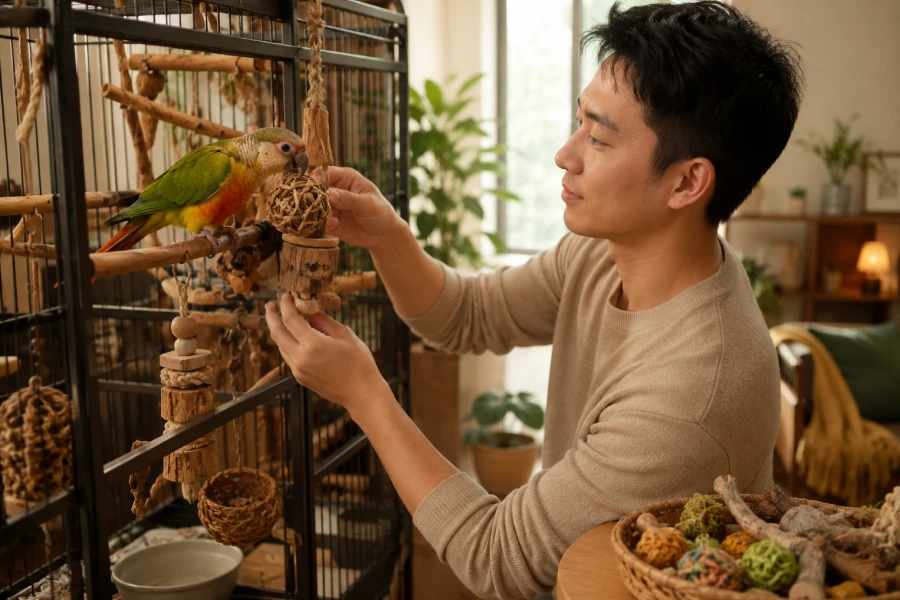
Toys for parrots that prevent boredom work best when they become part of a meaningful routine. A busy bird does not simply need more objects inside the cage. It needs reasons to use its beak, feet, senses, and attention. Predictable days can still feel lively when each activity offers a small surprise. That is especially valuable during quiet hours when people are unavailable. A thoughtful selection also protects household harmony. Birds with appropriate outlets often direct less energy toward screaming or destructive chewing. The goal is not constant stimulation from morning until night. Instead, it is a balanced environment that encourages curiosity, rest, and independent play. That balance makes everyday care feel more rewarding for both bird and owner.
Boredom often begins when a clever animal can predict every part of its day. The same perch, food bowl, and hanging object eventually become background scenery. New textures and simple challenges bring attention back to the environment. They also give birds a healthier way to release energy. Consider chewing toys for parrots and bird cage enrichment as practical tools for an active mind. Chewing is not merely a messy habit. It provides physical work that many birds actively seek. A suitable object can redirect that drive toward approved materials. Over time, these choices make the cage feel less predictable and more engaging.
Birds benefit from a day that changes gently rather than dramatically. Start mornings with a familiar activity that feels safe and easy. Save a new item for a period when you can observe the reaction. Offer an accessible option before leaving the home for several hours. Then create a quieter setting later, when many birds settle naturally. This rhythm teaches a parrot that activity arrives without creating pressure. It also helps you identify the times when attention is most valuable. Not every toy needs to stay available all day. A short, well-timed interaction can be more exciting than permanent access. Small changes are easier for sensitive birds to accept.
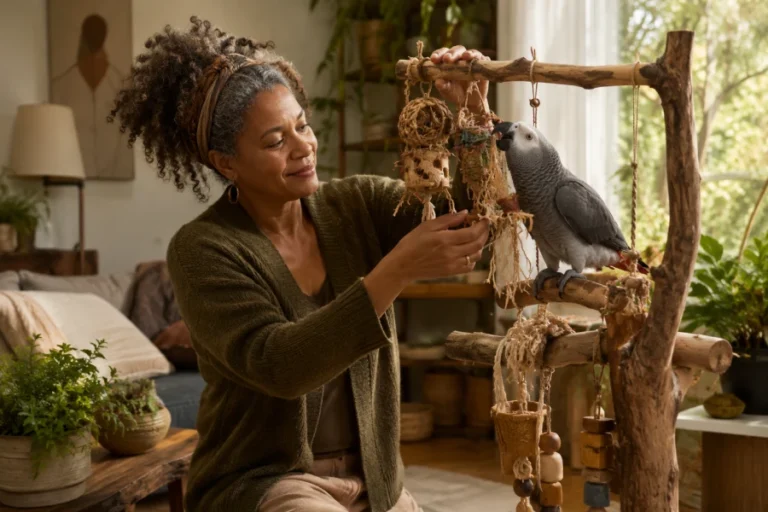
Good choices reflect the bird in front of you, not a generic shopping list. Some parrots enjoy shredding material into tiny pieces. Others prefer manipulating knots, beads, or movable parts. Consider the strength of the beak before choosing wood thickness or toy size. Watch whether your bird approaches new items boldly or needs gradual introductions. Useful parrot playtime ideas and destructive behavior prevention often start with these simple observations. A bird that destroys toys quickly may need heavier materials. A hesitant bird may respond better to a familiar texture. Matching difficulty to ability avoids frustration on both sides. That fit is what turns a toy into a genuine daily outlet.
Variety does not require filling every available inch with accessories. A crowded cage can make movement awkward and reduce the appeal of each object. Instead, alternate between items that invite chewing, climbing, foraging, and sound. Keep one dependable favorite visible as an anchor. Add another activity that offers a new texture or challenge. Take note of what your bird returns to after the initial excitement fades. That behavior offers better information than packaging promises. A rotating collection also helps keep cleaning manageable. When an item looks worn, remove it before loose parts become a risk. Freshness comes from thoughtful changes, not constant replacement.
Changes in behavior can show whether the environment is meeting a bird’s needs. You may see longer periods of focused play. You may hear fewer attention calls during predictable work hours. Some parrots become more relaxed around unfamiliar objects. Others seem eager to explore after a cage refresh. Stronger problem-solving habits can also emerge over time. For a helpful foundation, explore parrot mental stimulation and pet bird toy safety before introducing complicated activities. Always inspect materials, clips, and surfaces closely. Make sure the object suits your bird’s size and habits. Consistent observation keeps play constructive instead of overwhelming.
The most successful setup feels personal rather than decorative. It respects your bird’s confidence level and its favorite ways to interact. Some days call for a demanding food puzzle. Other days call for simple shredding beside a comfortable perch. You do not need to force excitement every hour. A well-designed environment gives the bird permission to choose. That sense of control can make even a small cage update feel significant. Keep learning from what your parrot ignores, explores, and protects. Those responses are useful feedback, not failures. With time, your collection becomes more efficient and more meaningful. The result is a lively home where your bird has something worthwhile to do.

Leave a comment