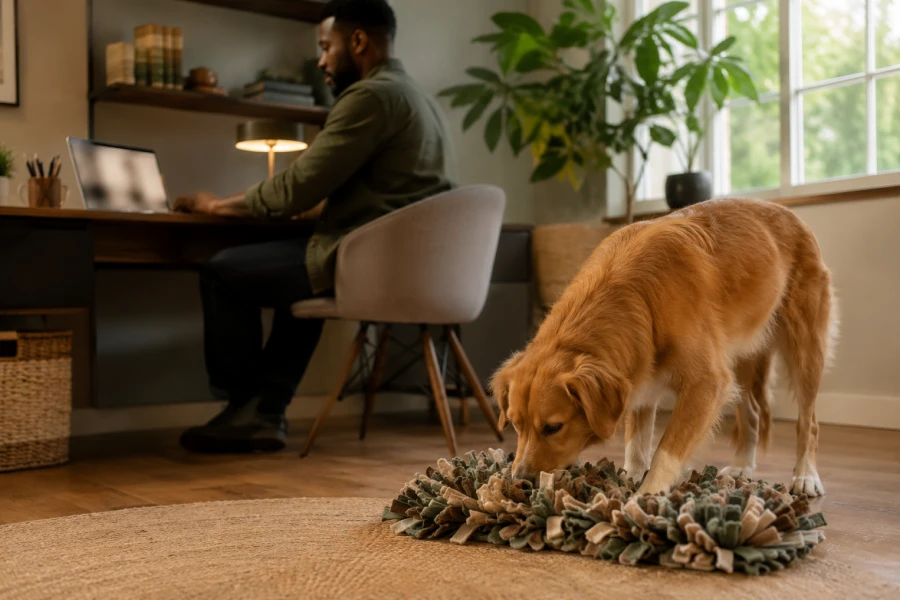
Dog enrichment while working from home helps transform a long indoor day into a more balanced routine. Dogs notice when the household rhythm changes, especially when people stay nearby but remain busy. Without structure, that closeness can create frequent interruptions and rising frustration. The answer is not constant entertainment. It is a predictable mix of movement, quiet activity, rest, and connection. A few well-timed choices can help a dog settle while you focus. Those choices also reduce the pressure to solve boredom in the middle of a meeting. Enrichment works best when it fits the workday instead of competing with it. With a clear rhythm, both dog and owner gain more breathing room. The home becomes a shared workspace where everyone has a role.
Structure gives a dog clear clues about what happens next. Begin the day with a short walk, sniffing time, or simple training task. Follow that activity with breakfast or a calm chewing option. Then create a predictable transition into your work block. This pattern helps separate active time from quieter time. Useful dog enrichment activities and interactive dog toys can support that rhythm without demanding your attention all day. Choose options your dog can enjoy safely with appropriate supervision. Keep the first work block realistic, especially with younger or high-energy dogs. A routine becomes easier when it begins with needs already met. That early success makes the rest of the morning feel calmer.
Your desk setup affects your dog more than it may seem. A bed positioned too close to constant movement can keep a dog alert. A quiet spot with a clear view may feel more secure. Test a few locations and observe where your dog settles naturally. Keep water nearby and remove hazards such as charging cords. Some dogs relax with low household sound. Others do better with fewer distractions and a closed door. Do not assume a dog needs to be beside you constantly. Independent rest is a valuable skill during work hours. A comfortable space makes that skill easier to practice.
Quiet activities are especially useful during calls, deep work, and focused tasks. A food puzzle or scent-based search can direct energy without creating noise. Rotate options so the same activity does not lose its appeal. Keep the level of difficulty appropriate for your dog. Too much challenge may create frustration at exactly the wrong moment. Explore a workday dog routine and an office-friendly dog setup to build quieter blocks into your schedule. Offer these activities after a brief movement break whenever possible. A dog who has sniffed and stretched often settles more readily. The aim is not total silence. It is a calmer outlet that fits the moment.
Transitions often matter more than the length of a break. A short walk from the desk to the yard can reset attention for both of you. A few minutes of sniffing may provide more satisfaction than another thrown ball. Use the end of a meeting as a cue for water, toileting, or a simple cue practice. Then guide your dog back toward rest before returning to work. Reliable mental stimulation for dogs and independent dog play makes these transitions easier to plan. Keep the pattern repeatable rather than elaborate. Dogs often relax when they can predict the sequence. Those predictable resets reduce attention-seeking between planned breaks.
A tired dog is not always a dog that has run hard. Physical exertion can leave some dogs more excited instead of more settled. Productive tiredness often looks like relaxed chewing, a deep sigh, or an easy nap. Notice whether your dog can choose rest after an activity. That response tells you more than the number of minutes spent moving. Mix physical exercise with sniffing, problem solving, and calm social contact. Avoid escalating intensity all day in an attempt to create quiet. A balanced dog has opportunities to use energy and opportunities to recover. That recovery is crucial when work requires long periods of stillness. Rest is part of enrichment, not the absence of it.
Independence helps a dog feel secure even when you cannot respond immediately. Practice small periods of settled time while you remain nearby. Reward calm choices, such as resting on a bed or chewing an approved item. Avoid responding to every request for attention with instant play. Instead, wait for a planned break whenever your dog’s needs have been met. This teaches that connection remains available without being constant. Begin with short expectations and build gradually. Keep departures from the desk calm and unremarkable. A dog that understands the routine often becomes less demanding over time. That confidence makes working at home easier without making the day feel lonely for your pet.


Leave a comment