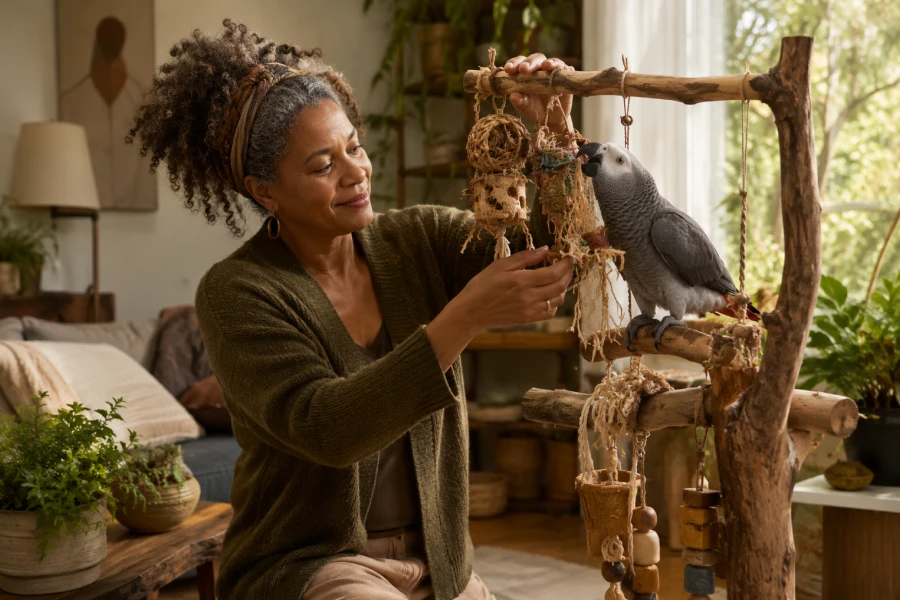
Parrot toy enrichment changes a cage from a waiting room into a living habitat. Smart play opportunities give bright birds reasons to climb, search, chew, and investigate. That matters because parrots notice repetition faster than many owners expect. Without fresh challenges, even a social bird can become noisy, withdrawn, or destructive. Play should satisfy instincts rather than merely fill visible space. The best choices invite small decisions throughout the day. Some encourage shredding, while others reward patience and careful problem solving. Rotation also preserves novelty without demanding a shopping spree. At home, these details support calmer routines and more confident behavior. With thoughtful planning, enrichment becomes a shared ritual rather than another chore.
Purpose is the starting point for every useful play choice. A bright bird needs activities that resemble what it would do naturally. Climbing uses the body and supports confident movement. Chewing gives the beak appropriate work instead of inviting furniture damage. Foraging makes food a problem worth solving. The most useful parrot enrichment activities and safe bird toys combine these needs without overwhelming the cage. Material, scale, and construction deserve the same attention as novelty. Look for pieces that offer several simple actions instead of one noisy trick. That keeps interest alive across different energy levels. It also makes supervision easier when a new item first appears.
Good cage design creates open routes as well as interesting destinations. Perches should leave enough room for wings, turns, and comfortable landings. Place one engaging object near a familiar perch rather than crowding every corner. A bird should be able to approach, retreat, and return on its own terms. That freedom helps cautious parrots build confidence gradually. Texture matters because feet and beaks explore differently than human hands. Natural fibers, untreated wood, and paper-based pieces often offer rewarding variety. Keep food, water, and rest areas clear of clutter. Observe where your bird spends quiet moments during the day. Those patterns reveal where a new activity may receive the warmest welcome.
Novelty lasts longer when toys do not remain visible every day. Set aside a small collection and bring back one familiar favorite after a short break. That simple practice makes an old object feel newly interesting again. It also lets you notice which features hold attention most reliably. Explore bird toy rotation and interactive parrot toys when you want play to feel fresh without becoming chaotic. Change only one or two items at a time. Sudden full-cage makeovers can unsettle sensitive birds. Keep a mental note of texture, sound, and difficulty preferences. Soon, you will see a clear pattern in what sparks curiosity. That knowledge makes future choices far more intentional.
Discovery is more rewarding when a bird can influence the outcome. Hide a small portion of approved food inside a simple paper parcel. Thread leafy greens through a secure holder near a favored perch. Offer a new shredding surface during the portion of the day when energy rises. These moments encourage effort without creating frustration. Well-chosen foraging toys for parrots and parrot puzzle toys can make that process easier to repeat. Start with a task your bird can solve quickly. Then raise the challenge only after success becomes routine. A small win builds confidence faster than an impossible puzzle. Every successful interaction makes the next invitation more appealing.
Enrichment rarely produces one dramatic change overnight. Instead, you may notice smaller shifts that feel encouraging. A bird may investigate its surroundings with more patience. It may spend less time calling insistently for attention. Some parrots begin chewing approved materials more consistently. Others become more willing to move around the cage. Relaxed preening after play can also be a useful sign. Watch body language rather than relying on a single behavior. A content bird still has energetic moments and strong opinions. The difference is that its day contains more productive outlets. Those outlets create a calmer foundation for training and companionship.
Every parrot brings a different personality to its environment. One bird may love to dismantle soft materials. Another may prefer bells, climbing ropes, or hidden treats. Age, confidence, species, and prior experience all shape those preferences. Begin with observation before deciding what belongs in the cage. Notice when your bird is active, cautious, playful, or tired. Offer choices that fit those moments instead of forcing one style of play. Supervise unfamiliar objects before leaving them available for longer periods. Remove damaged pieces promptly and inspect hardware often. Most importantly, let play become part of a varied daily rhythm. A thoughtful environment gives your bird more ways to feel capable, occupied, and secure.


Leave a comment