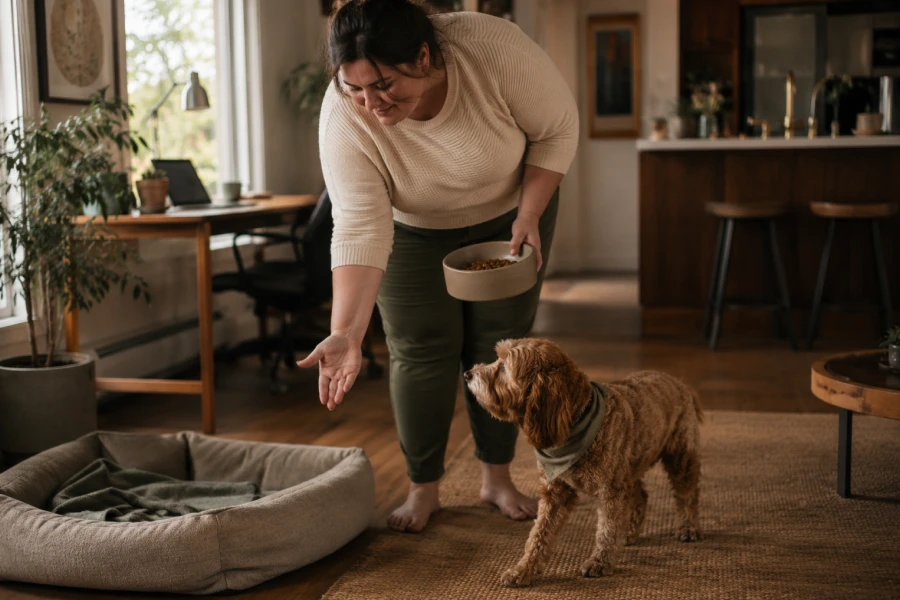
A work from home dog routine works best when it gives both of you dependable signals. Dogs adjust more easily when activity and quiet time follow a familiar order. You also benefit when breaks are planned instead of triggered by frustration. The routine does not need to be rigid or complicated. It simply needs to meet your dog’s needs before restlessness takes over. Start by considering the natural rhythm of your household. Think about wake-up time, meals, calls, walks, and evening energy. Then build a pattern that feels realistic on ordinary weekdays. Small predictable moments often matter more than one ambitious afternoon outing. A routine you can maintain helps your dog feel secure and helps you stay focused.
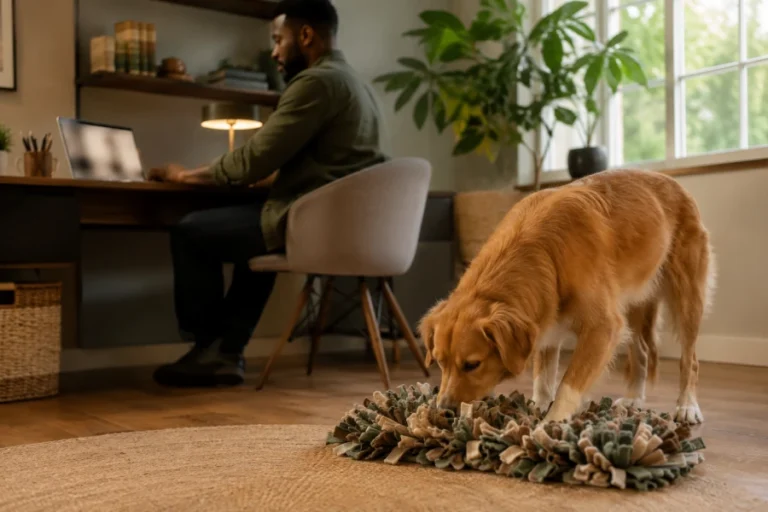
Anchors are the dependable moments that organize the rest of the day. Morning movement can become the first anchor. Breakfast and a short quiet activity can become the second. A midday walk or sniffing break can create another useful point of reference. These moments tell your dog that attention is coming again. They also reduce the urge to demand it constantly. Use dog enrichment activities and independent dog play between those anchors when you need a calmer stretch. Keep each activity simple enough to repeat often. Consistent patterns become easier for dogs to understand. That clarity supports a more relaxed workday for everyone.
The first hour often sets the emotional tone for the whole day. Start with a short outing before opening email or joining calls. Give your dog a chance to sniff, move, and use the bathroom. Then return home for water and food. Avoid immediately expecting perfect stillness afterward. A brief settling activity can make the transition easier. Place your dog in a comfortable space with something appropriate to chew. Keep your own movements calm as you begin work. That quiet start teaches the difference between morning activity and workday rest. Over time, the sequence itself becomes reassuring.
Meeting gaps are valuable even when they last only a few minutes. Use them for a quick reset instead of scrolling through another screen. Offer water, a bathroom break, or a few simple cues. Let your dog sniff outside for a moment. These short breaks can prevent a larger disruption later. Consider a workday dog routine and an office-friendly dog setup when you want the space around those breaks to feel intentional. Keep toys and supplies ready before the workday begins. Preparation makes short windows more useful. Even a brief interaction can reassure a dog that connection has not disappeared. Regular microbreaks build trust without derailing the calendar.
Rest becomes easier when it follows meaningful activity. A dog that has walked, sniffed, eaten, and engaged its mind often settles more naturally. Avoid assuming that more physical activity always creates better rest. Some dogs need calming tasks rather than faster games. Notice which activities lead to relaxed body language afterward. That response helps you refine the daily sequence. Thoughtful mental stimulation for dogs and calm behavior training can support this quieter side of the schedule. Make the resting place comfortable, low-traffic, and predictable. Reward your dog for choosing it independently. Rest is not a pause in the routine; it is one of its most important outcomes.
Dogs quickly notice patterns that people overlook. Closing a laptop can signal an upcoming walk. Putting on shoes can create excitement before you leave. A phone call may predict that attention will be limited for a while. Use these signals carefully rather than letting them create constant anticipation. Pair work cues with a familiar resting activity. Then reserve play cues for the moments when you truly have time. This distinction helps your dog understand what each part of the day means. Clear signals reduce confusion. They also make it easier for your dog to recover when the schedule changes. The calmer the cues, the calmer the expectation.
Flexibility keeps a routine useful when real life becomes unpredictable. Some days include back-to-back calls or unexpected errands. On those days, simplify the plan rather than abandoning it. Keep one core walk, one calm activity, and one connection break. Then return to the usual pattern when the day allows. A dependable fallback prevents both you and your dog from feeling lost. Make sure the backup routine still includes basic movement and mental engagement. Avoid trying to compensate with a frantic late-night session. Gentle consistency is more sustainable. A flexible routine succeeds because it respects the realities of work, not because it follows a perfect timetable.


Leave a comment