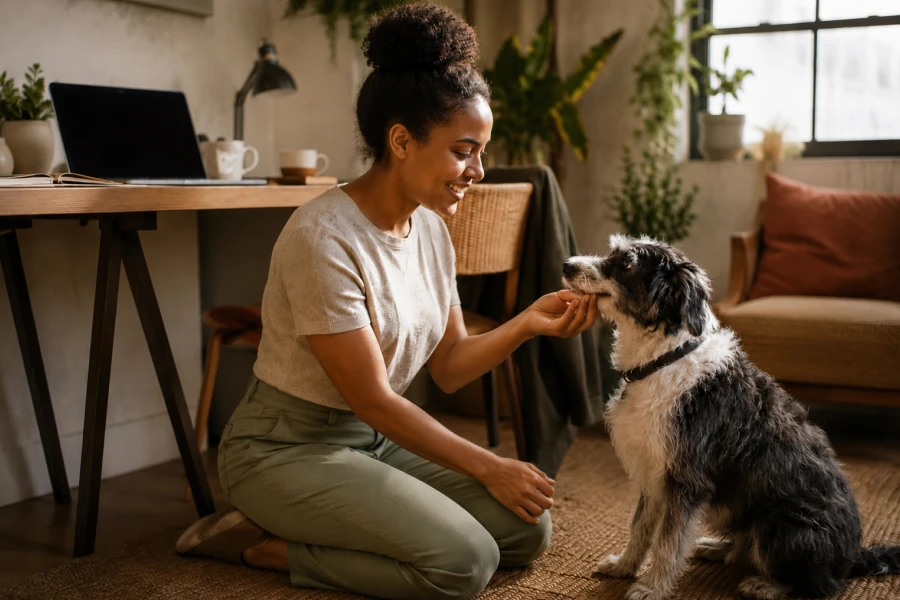
Dog training breaks during workday can turn scattered interruptions into purposeful moments. A short practice session gives your dog attention without requiring a long pause. It also gives you a reason to step away from the screen and reset your focus. The best sessions are brief, clear, and easy to repeat. Think of them as small conversations rather than formal lessons. A few successful cues can build confidence over time. These breaks work especially well when they appear at predictable transitions. They can follow a meeting, a meal, or a short outdoor reset. With repetition, your dog learns that work hours still include moments of connection. You gain a practical way to strengthen behavior without losing the shape of your day.
Short training moments can sharpen attention for both dog and owner. A simple cue such as sit, touch, or go to bed creates a clear task. Keep the reward immediate and the tone calm. End while your dog still wants another turn. This prevents practice from becoming tiring or frustrating. Explore dog training microbreaks and dog exercise breaks when you want to pair learning with movement. A one-minute walk to the door can become a cue practice opportunity. A brief stay before a food puzzle can do the same. These tiny lessons fit naturally between tasks. Their consistency is more important than their length.
Choose one or two cues that work in several rooms. A hand target, settle cue, or simple recall can fit a small space. Practice where your dog will actually spend time during the day. Keep distractions low at first. Then slowly add normal household movement. This helps the cue become useful beyond one quiet training moment. Avoid introducing several new behaviors at once. One clear skill gives you more progress than a confusing collection of commands. Use rewards your dog values without creating too much excitement. Calm, repeatable practice builds habits that transfer into daily life.
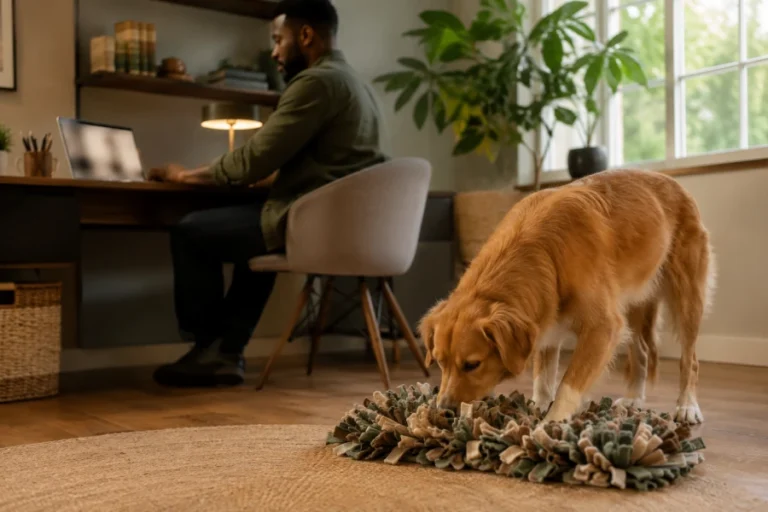
Brief sessions preserve enthusiasm and protect your schedule. Aim for one or two successful repetitions before returning to work. That may feel small, but small wins add up quickly. Use a timer if it helps you avoid stretching the break too long. Stop before your dog loses interest or begins guessing wildly. Useful puzzle feeders for dogs and dog boredom prevention can help bridge the time after training. Offer a quiet activity, then return to your desk without a dramatic goodbye. This teaches your dog that engagement can end calmly. Short sessions often make a stronger impression than long, unfocused ones.
Training creates clarity when each cue has one consistent meaning. Use the same word, gesture, and reward pattern whenever possible. That consistency helps your dog understand what earns attention. It also reduces the frustration of mixed messages. Practice the behavior in easy moments before expecting it during a busy call. Then use it as a gentle redirect when your dog starts to wander or demand attention. A calm cue can replace repeated scolding. This gives your dog something constructive to do instead. Over time, predictable responses can reduce uncertainty. Clear communication is one of the most valuable forms of enrichment you can offer.
Ending well matters as much as starting well. Finish with an easy cue your dog already knows. Offer a reward, a calm word, and a return to rest. Do not add extra repetitions simply because the session is going smoothly. Leaving your dog wanting more helps protect enthusiasm for the next break. It also lets you return to work with a clean transition. Keep the return quiet and matter-of-fact. Your dog learns that rest follows successful participation. That pattern can become comforting during long workdays. A good ending turns a tiny session into a reliable habit.
Training is not only for active requests and visible commands. Notice when your dog chooses to lie down, wait quietly, or settle near the desk. Rewarding those moments teaches that calm behavior also earns attention. This can be especially helpful for dogs who become excited by every work break. Use interactive dog toys and an office-friendly dog setup to support that calmer environment. Offer a familiar activity after rewarding the settle. Then return to your task without extending the interaction too long. The message becomes clear: quiet choices work. Over time, those choices can shape a smoother rhythm for the entire home.

Leave a comment