
How to keep a dog busy while working from home becomes easier when you stop treating every moment as a problem. Most dogs do not need nonstop activity to have a fulfilling day. They need a rhythm that gives their energy somewhere useful to go. That rhythm should include exercise, mental work, rest, and predictable attention. The right mix varies by age, breed, health, and personality. Still, every dog benefits from knowing when something interesting will happen next. Planning those moments ahead of time keeps you from scrambling during important tasks. It also helps your dog learn that quiet periods have a purpose. A calmer workday begins when activity becomes intentional. Your goal is a dog that can settle because its needs have already been addressed.
Prepare the first active period before you open your laptop. A brisk walk, a sniffing route, or a few training repetitions can help your dog release anticipation. Follow that activity with breakfast or an appropriate chew. Then guide your dog toward a familiar resting place. This sequence creates a natural shift from connection to downtime. Consider dog boredom prevention and calm behavior training when you want that shift to feel more consistent. Keep the steps similar on most weekdays. Consistency helps dogs understand that your work hours are not a rejection. They are simply one predictable part of the household routine. That understanding can reduce demands for attention during the first busy block.
A dog-friendly workday does not need a complicated schedule. Mark a few realistic windows for movement, water, toileting, and connection. Place them around meetings when possible. Short breaks work best when they are reliable. Do not promise an hour of play if your calendar rarely allows it. Instead, make a five-minute reset truly happen. Use a longer lunch break for a walk, scent game, or relaxed yard time. Let your dog rest when the workday becomes demanding. A simple routine you repeat is more valuable than an ideal routine you cannot maintain. Realistic planning supports both productivity and trust.
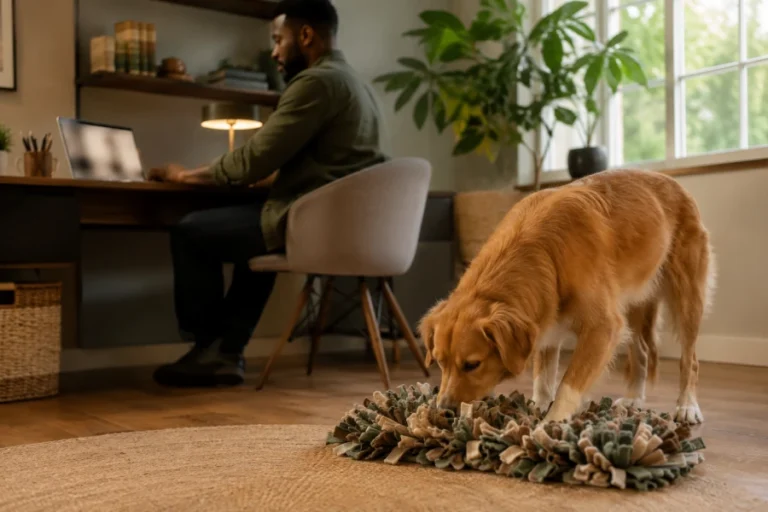
Food can become a useful activity rather than a fast interruption. Divide part of a meal into a puzzle, scatter game, or slow-feeding option. Start with an easy format so your dog understands the task. Then introduce small variations over time. Avoid making every meal difficult, especially for dogs that become frustrated quickly. Useful puzzle feeders for dogs and working from home with a dog can turn ordinary food into a quiet focus activity. Offer these tasks when you need a sustained concentration block. Clean up afterward so your dog does not keep searching the workspace. Purposeful feeding gives the brain a job without adding chaos. That makes it a practical tool for many workdays.
Some activities fit a video call better than others. Loud toss toys and energetic games may be perfect after work, not during a presentation. Choose calmer options for the middle of the day. A stuffed food toy, safe chew, or scent search can offer quieter engagement. Keep a small rotation so one item does not become predictable. Store high-value options for your busiest hours. This creates a positive association with your work routine. If your dog becomes vocal, check whether it needs movement or a bathroom break first. Then return to a simple calm activity. Matching the activity to the noise level prevents many avoidable interruptions.
One reliable reset can rescue a difficult afternoon. It may be a quick leash walk, a change of room, or a few minutes of gentle training. The point is not to exhaust your dog. It is to interrupt the build-up of restlessness before it grows. Keep the reset easy enough to repeat on hectic days. A short game of find-it can work well in a quiet room. A calm sniff around the yard can work just as well. Use the same cue each time so your dog recognizes the pattern. Predictability makes the break feel meaningful. It also helps you return to work without lingering uncertainty.
Energy spikes are normal, especially for young dogs and active breeds. Notice when they happen instead of waiting until they become disruptive. Many dogs become restless before lunch or near the end of the day. Plan a larger movement break around that natural rhythm. Use dog exercise breaks and dog training microbreaks to redirect that energy constructively. Keep the session short, clear, and enjoyable. Then offer water and an easy transition back to rest. Over time, your dog may begin anticipating these planned outlets. That anticipation can make the rest of the day feel far more manageable.

Leave a comment