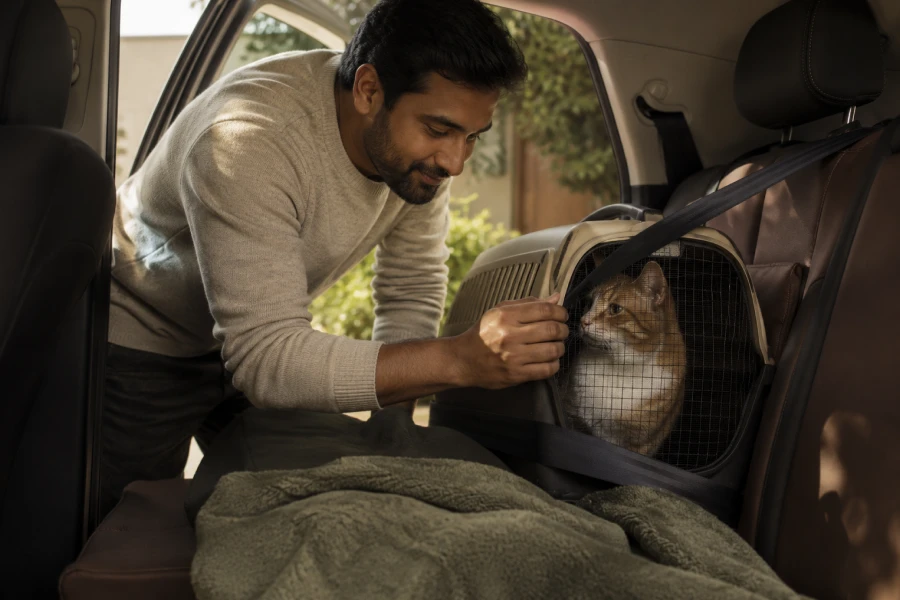
Cat car travel tips are most helpful when they reduce uncertainty before the vehicle moves. A comfortable trip depends on preparation, not last-minute improvising. Cats notice disruptions in routine long before people recognize them. That is why the carrier, timing, and car environment matter together. Start with a plan that feels practical for your own schedule. Then give your cat several chances to experience each step calmly. A short rehearsal can reveal problems you would rather solve at home. It may show that a blanket slips, a carrier rattles, or a route feels too long. Those small discoveries can prevent bigger stress during the actual trip. Calm preparation turns travel from a scramble into a manageable routine.
The carrier should feel steady, spacious enough, and easy to access. Leave it available at home rather than storing it out of sight. Add bedding that smells familiar and stays in place during movement. Offer treats near the entrance before encouraging your cat to step inside. When the carrier becomes ordinary, travel loses some of its emotional weight. You can also use cat motion sickness support and car ride desensitization for cats to shape a gentler introduction. Start with a few minutes inside the parked car. Then try a brief drive when your cat is ready. Slow progress tends to be more effective than one difficult long outing. Every calm rehearsal builds useful familiarity.
Cats communicate discomfort in ways that are easy to overlook. Rapid breathing, heavy vocalizing, drooling, or restless movement may signal stress. A very still cat may also feel overwhelmed rather than relaxed. Watch the whole pattern instead of reacting to one sound. Note when your cat begins to settle after the car starts moving. That timing can help you judge whether practice drives are helping. Keep your tone calm and your movements deliberate. Avoid opening the carrier while the car is in motion. Check that airflow remains comfortable around the carrier. Good observation makes each future ride safer and more responsive.
The first section of a drive often feels hardest for a nervous cat. Keep the route simple and avoid unnecessary stops. Smooth turns and gradual braking can make a noticeable difference. Put away loose items that may shift or rattle beside the carrier. Some cats benefit from a partial cover that reduces visual movement. Others prefer a clear view of the cabin. Notice which response appears calmer for your pet. For longer rides, prepare a road trip litter box and travel water for cats before you need them. Keep these supplies separate from food and personal luggage. Organization reduces stress for the owner, which can help the cat as well.
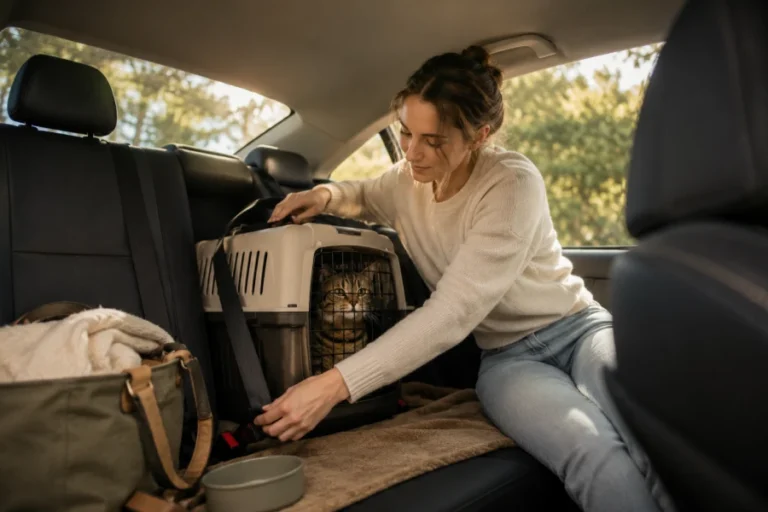
Comfort depends on more than a soft blanket. The carrier should stay out of direct sun and away from forceful air vents. Cabin temperature can change quickly when the weather shifts. Check it often instead of relying on your own comfort alone. Make sure your cat cannot slide around during sharp turns. A secure carrier allows the body to rest more naturally. Keep familiar fabric inside, but avoid loose strings or bulky objects. Prepare absorbent pads in case of accidents. Small practical steps make cleanup faster and less disruptive. When your cat stays physically comfortable, emotional recovery becomes easier too.
Many travel challenges come from details that seemed minor at home. A carrier door that sticks can create panic at a rest stop. A forgotten towel can turn a small mess into a larger problem. A loud playlist can keep a sensitive cat alert for too long. Think through the entire trip from loading to arrival. Have sanitation supplies, water, and contact information ready before departure. Bring a familiar item for the destination, not only the drive. Useful cat travel comfort and feline stress reduction strategies often come down to these small preparations. When the basics are in place, you can focus on reading your cat rather than searching for supplies. That focus makes the trip feel much more manageable.
Long trips call for a slower, more flexible mindset. Build extra time into the itinerary instead of pushing through every delay. Choose breaks that keep your cat protected inside the carrier. Offer water when the vehicle is safely parked. Keep feeding simple, especially if your cat tends to feel unsettled in motion. At the destination, start with one quiet room and familiar essentials. Let your cat choose the pace of exploration. Do not expect normal behavior immediately. A longer ride can be tiring even when it goes well. Patience at the end of the day helps your cat regain confidence more quickly.



Leave a comment