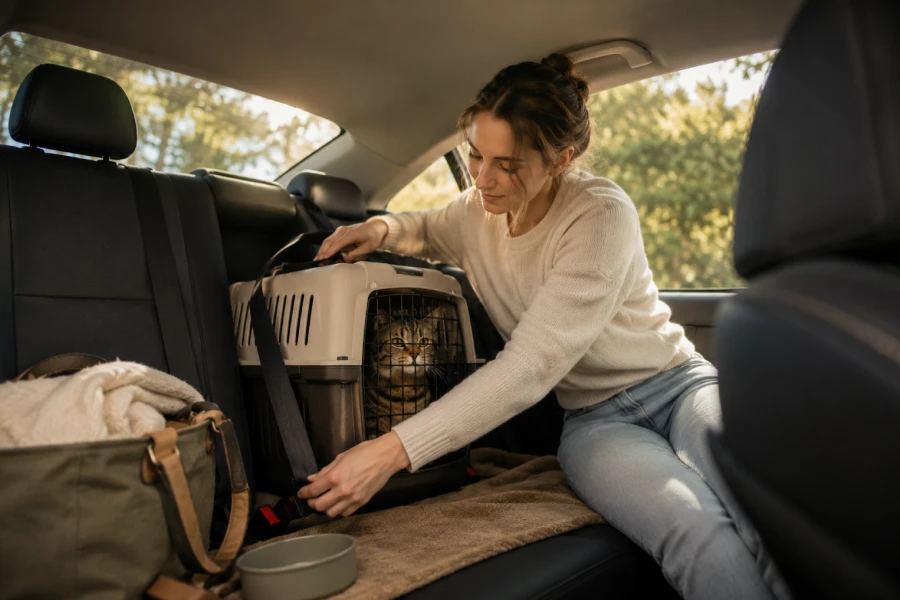
Knowing how to travel with a cat in the car begins long before departure day. Cats do not usually enjoy sudden changes, unfamiliar smells, or moving spaces. A calmer ride starts with small practice sessions at home. The carrier should feel like a familiar resting place, not a signal of stress. Your car can become less alarming through short, uneventful visits. These early steps make the trip feel more predictable. They also give you time to notice what comforts your cat most. A soft scent, a secure carrier, and a steady voice can all matter. Preparation does not eliminate every meow or nervous moment. It does create a more manageable experience for both of you.
Begin by leaving the carrier open in a peaceful part of the home. Add familiar bedding and offer treats nearby without forcing entry. Let your cat choose when to explore. After that feels normal, practice closing the door briefly. The goal is to make the carrier part of daily life instead of a sudden event. A thoughtful cat car carrier setup and cat carrier training can make these early steps easier. Keep sessions short and end them before your cat becomes upset. Repeat the routine across several days rather than rushing. Familiarity builds through calm repetition. That groundwork can change the entire tone of a future trip.
A car feels very different when viewed from a cat’s perspective. It vibrates, hums, shifts, and carries unfamiliar scents from past errands. Make the carrier stable by placing it on a flat surface and securing it appropriately. Avoid allowing it to slide or tip during turns. Keep the cabin temperature comfortable before bringing your cat inside. Reduce sudden loud music and avoid strong air fresheners. Covering part of the carrier with breathable fabric can create visual privacy. Leave enough airflow and check your cat regularly. Prepare water, cleanup supplies, and a backup towel within easy reach. These simple details reduce surprises when the road becomes busy.
Familiar scents can soften the strangeness of a new environment. Place a recently used blanket inside the carrier before travel. Avoid washing that item immediately before the ride, since familiar odor offers reassurance. Some cats also relax with a well-known toy that has no loose parts. Do not overload the carrier with too many objects. Space matters because your cat needs to turn, settle, and regulate its position. Useful cat road trip essentials and pet-friendly car safety focus on security before convenience. Make sure doors, latches, and vehicle restraints work properly. A stable, familiar space helps your cat feel protected during movement. That security should remain the priority from driveway to destination.
Short practice drives can make future travel much less intimidating. Begin with a few quiet minutes around the block. Return home, open the carrier, and allow your cat to leave at its own pace. Pair the experience with something pleasant, such as a meal or calm playtime. Increase the drive length slowly when your cat appears more comfortable. Do not interpret one vocal trip as a failure. Some cats express concern while still adapting well overall. Use calming cat travel tips and a feline travel routine to make each practice outing more predictable. The goal is not perfect silence. It is a cat that can recover and settle more easily after each outing.
Longer rides require a plan for rest, water, and basic care. Keep the carrier closed whenever doors or windows are open. Never assume your cat will remain calm in an unfamiliar parking area. Choose quiet stopping points whenever possible. Offer water during longer breaks if your cat is willing. Keep meal timing simple, especially for cats that become unsettled in motion. Check the carrier floor and bedding after each major stretch. Speak softly and move steadily around the vehicle. These pauses are less about creating entertainment and more about preventing discomfort. A calm routine lets your cat know that the journey has predictable intervals.
Arrival should feel slow, quiet, and controlled. Bring the carrier directly into one safe room before opening it. Set out water, a litter box, and a familiar blanket nearby. Keep doors closed until your cat has adjusted. Give your pet the chance to emerge without being chased or coaxed. Some cats explore immediately, while others need several hours. Both responses can be normal. Avoid inviting visitors into the room too quickly. Instead, let familiar sounds and objects do the calming work. A gentle arrival helps complete the trip on a reassuring note.



Leave a comment