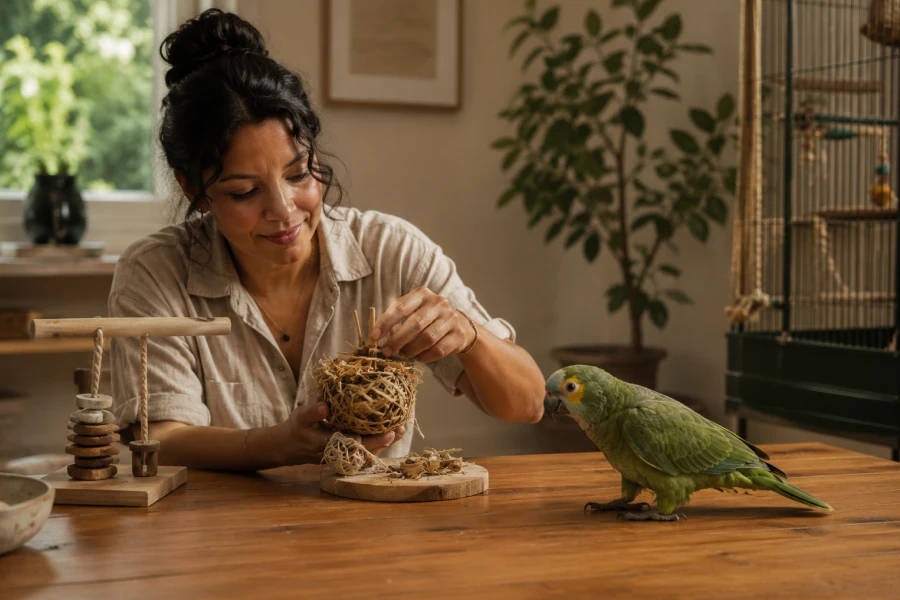
How to keep a parrot entertained is less about buying endlessly and more about observing carefully. Parrots thrive when their environment changes in ways that make sense to them. They want opportunities to work, explore, choose, and return to familiar comforts. A crowded cage, however, can create stress instead of enjoyment. The best approach gives each item a clear purpose. One activity might encourage foraging, while another supports climbing or shredding. That variety helps a bird use different skills throughout the day. It also makes independent time more productive when you cannot interact directly. With a few thoughtful adjustments, play can become a dependable part of everyday care. The result is a bird that has more outlets without losing its sense of safety.
Daily choices are more useful than occasional bursts of excitement. Start by noticing what your bird does when nobody is actively watching. Some parrots quietly shred paper for long stretches. Others search for hidden food or move repeatedly between perches. These habits point toward the kinds of challenges that feel naturally rewarding. Explore interactive parrot toys and foraging toys for parrots when you want those instincts to lead the setup. Introduce only one unfamiliar object at first. Give the bird time to inspect it without pressure. A patient introduction often creates more lasting interest than an instant cage makeover. That steady pace helps nervous birds feel included instead of overwhelmed.
Not every attention-grabbing object creates meaningful engagement. A loud toy may spark a quick reaction but lose value within days. In contrast, a simple item with layers to chew, pull, or uncover can remain interesting longer. The difference lies in what the bird can do with it. Look for activities that invite repeated action and small discoveries. Movement should feel voluntary rather than startling. Sound should add interest without dominating the room. This is especially important in homes where birds share space with work or family routines. A quieter object can still be deeply absorbing. When play feels natural, it supports focus without creating more noise for everyone else.
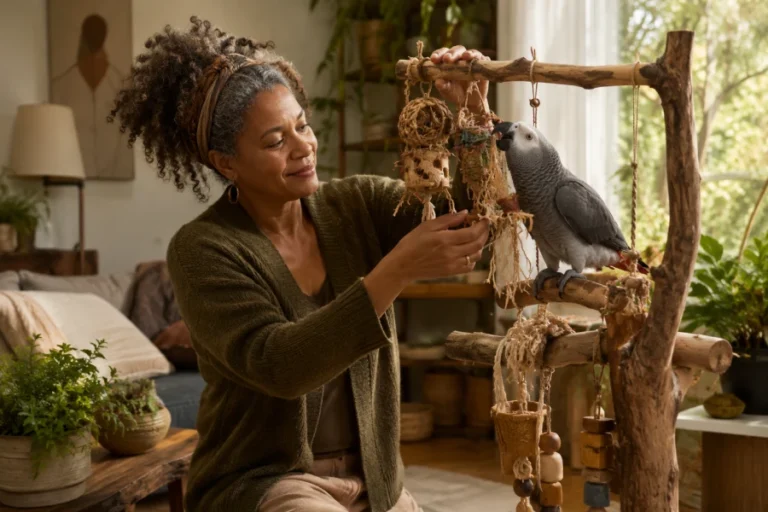
Foraging adds purpose to time that might otherwise feel empty. Instead of receiving every treat from an open bowl, a bird can search, peel, pull, and uncover. Begin with an easy task that reveals a reward quickly. Then vary the hiding place or material after the bird understands the idea. Consider parrot puzzle toys and bird toy rotation to keep those tasks engaging over time. Do not raise the difficulty too fast. Frustration can make a clever bird abandon the activity entirely. Success builds confidence, and confidence invites more exploration. A few minutes of useful effort can transform an otherwise ordinary afternoon.
Safety is part of every rewarding play plan. Inspect clips, ropes, wood, and loose pieces before adding a toy to the cage. Choose sizes that prevent accidental trapping or unsafe chewing. Remove damaged materials as soon as they begin to fray or split. Keep new items under observation until you understand how your bird uses them. Secure placement matters just as much as the object itself. A toy that swings too wildly may frighten a cautious bird. One that blocks a favorite perch may never receive attention. Reliable safe bird toys and parrot playtime ideas create room for curiosity without unnecessary risk. That confidence lets you offer more variety with a calmer mind.
Parrots often respond to the rhythms of the home around them. A bright morning, familiar voices, and predictable feeding can all signal an active period. Use those cues when introducing a favorite activity. Reserve quieter choices for late afternoon or rest periods. Keep the cage in a space that offers social connection without constant commotion. A bird that can observe the household may feel more involved. Still, it needs moments of calm to focus on its own activities. Notice which sounds, rooms, and times support sustained interest. These small details can make a toy feel more valuable. Play works best when it fits the rest of the bird’s day.
Preferences can change as a bird grows, gains confidence, or becomes familiar with a routine. A toy that once seemed intimidating may later become a favorite. Another object may lose appeal after months of steady use. Keep a small reserve of options so rotation remains easy. Continue watching for signs of enthusiasm, hesitation, and mastery. Let those signals shape the next adjustment. Avoid assuming that one successful setup will work forever. Gentle updates keep the environment responsive without making it unstable. In time, you will build a collection that reflects your bird’s personality. That personal knowledge is the most reliable source of lasting enrichment.

Leave a comment